Cybersecurity marketing: how to get found by security buyers and AI shortlists
Security buyers don’t trust adjectives. They trust specifics, peers and proof. Here is how cybersecurity companies earn visibility where those buyers actually research.
 Trickency Team
October 21, 2026
4 min read
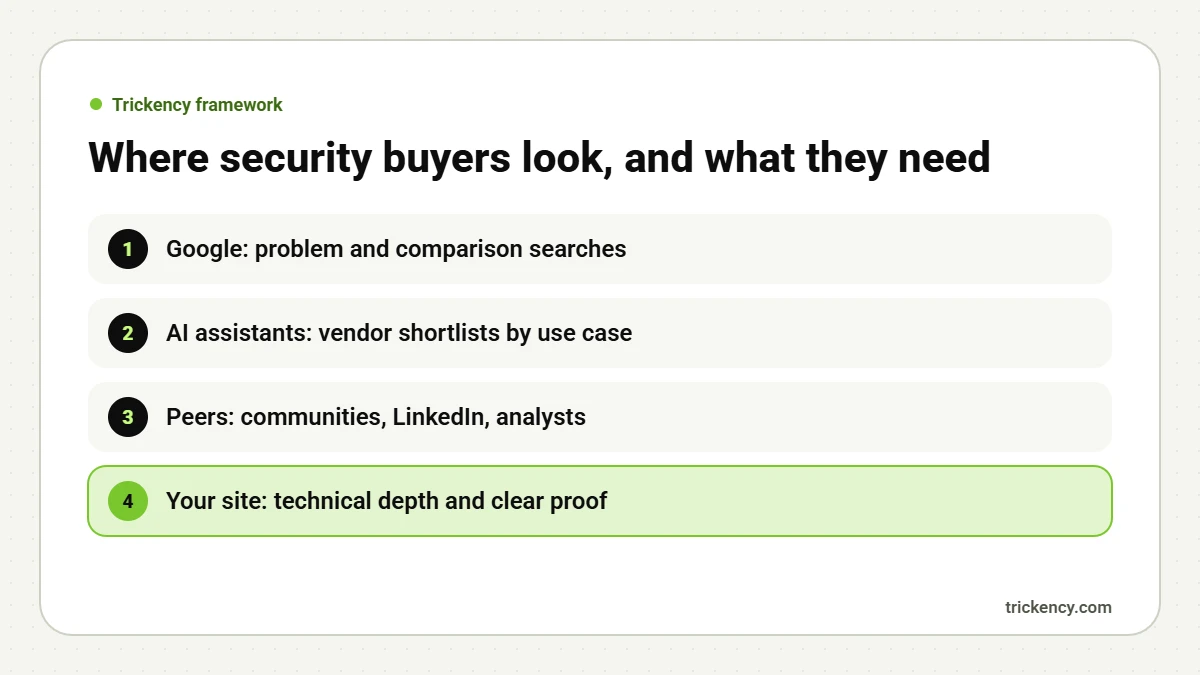
Security buyers are some of the hardest in B2B to market to. They are technical, they are sceptical by training, and they are surrounded by vendors making the same claims: “AI-powered”, “zero trust”, “single pane of glass”. When everyone sounds the same, buyers fall back on peers, analysts and, increasingly, AI assistants to build their shortlist.
That last point matters. In G2’s 2026 survey of software buyers, 69% chose a different vendor than they planned because of an AI chatbot’s recommendation, and about a third bought from a vendor they had never heard of before. If an assistant doesn’t mention you for “best [category] for [company size]”, you may never get the chance to pitch.
Key takeaways
- Replace buzzwords with specific threats, use cases and outcomes.
- Publish technical depth that practitioners will share.
- Build comparison and “how to choose” pages for your category.
- Make sure AI assistants describe you accurately and in the right category.
1. Name the problem precisely
Security buyers search for specific problems: “detect OAuth token abuse”, “SOC 2 evidence collection”, “reduce SIEM costs”. Build pages around those problems, with clear explanations of how your approach works and where it doesn’t. Precision signals expertise, and it matches how buyers phrase questions to AI tools.
2. Write for the practitioner, then the buyer
The person who finds you is often an engineer or analyst, not the budget holder. Give them depth: architecture diagrams, detection logic, integration details, honest limitations. Content that practitioners respect gets shared upward. We wrote about this in why your engineers won’t share your blog.
3. Own the shortlist moment
Create pages for the comparisons buyers make: you vs the incumbent, you vs open-source tooling, you vs building in-house. Add a “how to choose a [category] vendor” guide with criteria buyers can use. These are the pages AI assistants draw on when they build shortlists. See our approach to comparison pages.
4. Show proof that survives scrutiny
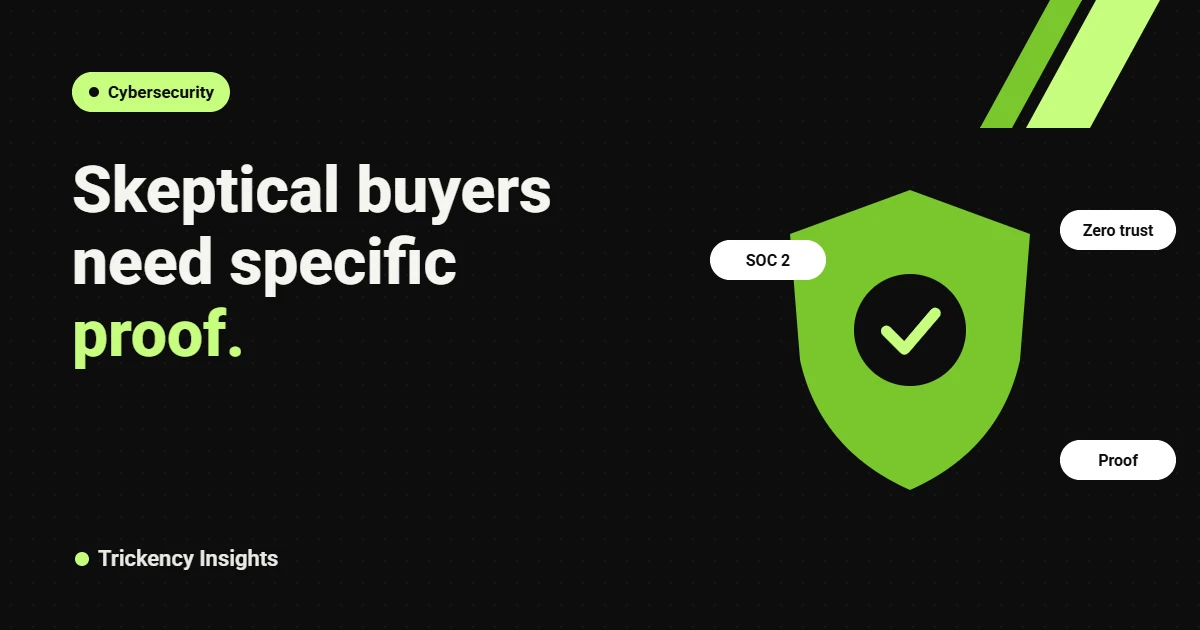
Security buyers discount marketing claims. They believe certifications, independent tests, named customers (with permission), and detailed case studies with real numbers. Put them on the pages that matter, not only on a separate “trust” page.
5. Check how AI tools describe you
Ask ChatGPT, Perplexity and Google: “What does [your company] do?”, “Best [category] tools for mid-size companies”, “[your company] vs [competitor]”. If the answers are wrong, outdated or missing, fix the sources they rely on: your site, review profiles, directories and press coverage. Our AI search optimization work starts here.
6. Put your experts in public
Security is a people business. Founders, CTOs and researchers who share useful analysis on LinkedIn and in communities build trust no ad can buy. A steady founder-led LinkedIn program is one of the highest-return channels for security vendors.
Example: turning a buzzword page into a buyer page
Before: “Our AI-powered platform delivers unmatched visibility across your entire attack surface.”
After: “See every SaaS app your employees sign into with Google or Microsoft, including the ones IT never approved. Most mid-size companies find 3 to 5 times more apps than they expected in the first week.”
The second version names the problem, the mechanism, the audience and a concrete expectation. A practitioner can evaluate it, and an AI assistant can repeat it accurately when someone asks about shadow IT discovery tools.
Content that earns links in security
Security is one of the few B2B categories where original research spreads quickly. Anonymised data from your platform, a threat write-up, or a benchmark of how long common tasks take can earn coverage from newsletters and communities. Those mentions then feed both Google rankings and the sources AI tools rely on. Publish the full method alongside the results; security readers will check.
A 90-day starting plan
- Weeks 1–3: audit how Google and AI tools describe you, fix category and positioning on your homepage and review profiles.
- Weeks 4–8: publish three problem pages, two comparison pages and one “how to choose” guide.
- Weeks 9–12: start a founder or CTO LinkedIn program and pitch one piece of original data to industry newsletters.
Then measure demo requests, AI mentions and rankings for your problem terms, and repeat what worked.
FAQ
Does SEO work for enterprise security products?
Yes. Enterprise deals still start with research. Ranking and being cited for specific problems puts you on the shortlist before procurement begins.
Should security content be gated?
Gate only high-value assets such as full reports. Keep explanations, comparisons and how-to content open so it can rank and be cited.
How technical should our content be?
More technical than feels comfortable. Practitioners are your first readers, and depth earns their trust.
Marketing a security product? See our cybersecurity marketing page or get a free audit of how AI tools describe you today.
Sources: G2 “The Answer Economy” via Demand Gen Report, May 2026.

The Trickency team writes about SEO, AI search and LinkedIn for B2B SaaS and tech companies, drawing on real client work since 2021.