LinkedIn outreach for B2B SaaS that books meetings, without feeling like spam
Most LinkedIn outreach fails in the first line. Here is a process that earns replies from B2B buyers: tighter lists, a warm-up step and messages built around their world, not your product.
 Trickency Team
October 21, 2026
4 min read
Every B2B buyer’s LinkedIn inbox is full of the same message: a compliment, a pitch and a calendar link. Response rates are falling because buyers have learned to ignore it. Gartner’s 2026 sales survey found 67% of B2B buyers would rather buy without a sales rep at all. Outreach still works, but only when it feels like help from someone who has done their homework.
Key takeaways
- Smaller, sharper target lists get more replies than big ones.
- Warm up prospects with real engagement before you message them.
- Open with an observation about their business, not your product.
- Ask for a reply, not a meeting, in the first message.
1. Build a list you can personalise
Start with 150 to 250 accounts that match your ideal customer profile closely: industry, size, tech stack, a recent trigger such as funding, hiring or a new product line. Then pick one or two people per account who own the problem you solve. A list this size is small enough to research properly.
2. Warm up before you write
Follow the person, read their last few posts, and leave one genuine comment where you have something useful to add. When your message arrives a few days later, your name is familiar. If the founder is also posting regularly, prospects can check your thinking before they reply.
3. Write a first message about them
Keep it under 60 words. Lead with one specific observation, link it to a likely problem, and offer something useful.
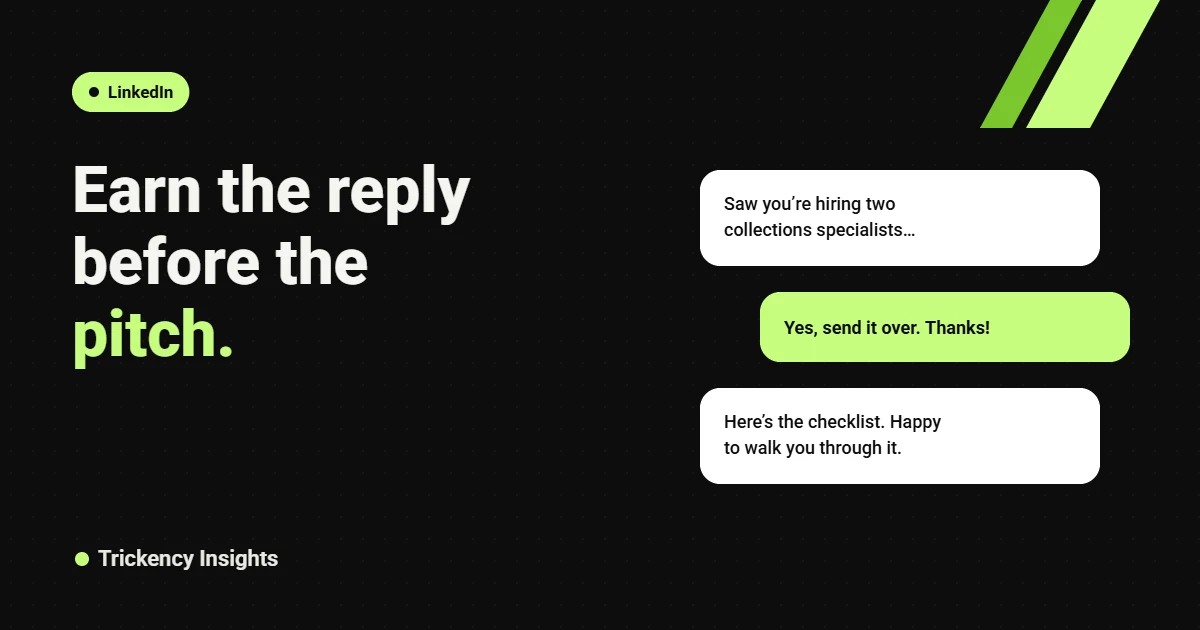
“Saw you’re hiring two collections specialists in Miami. When funders grow that team, reconciliation usually becomes the bottleneck. We put together a one-page checklist on it. Want me to send it over?”
No calendar link. No feature list. The only ask is a reply.
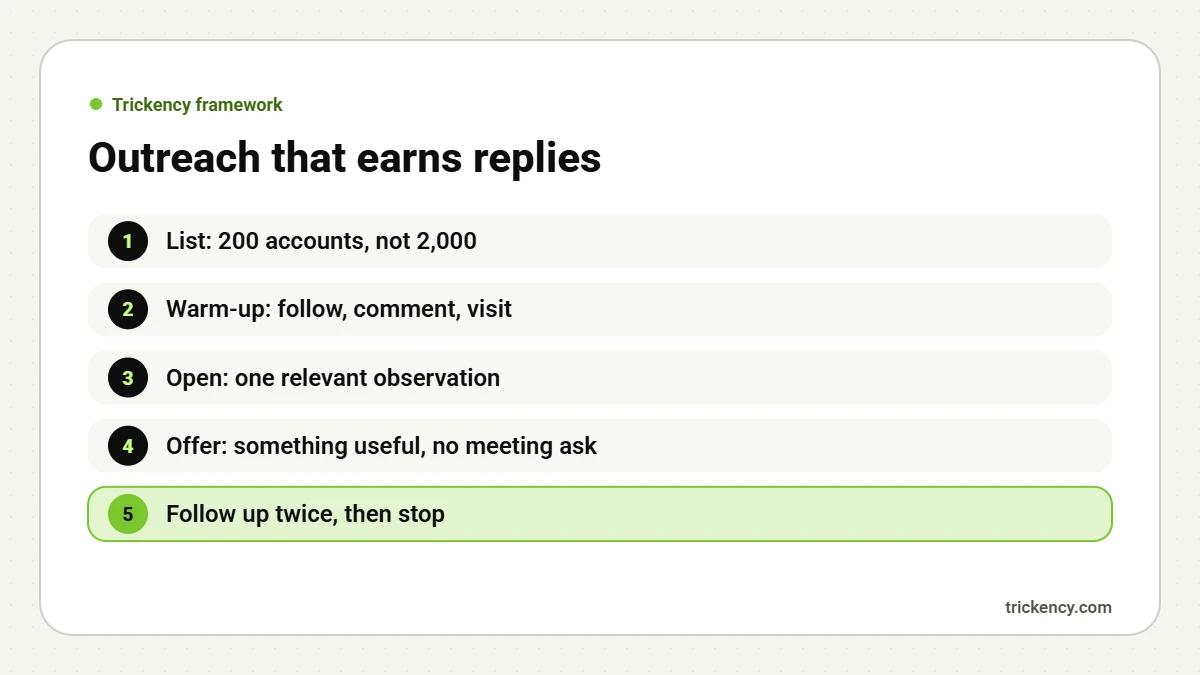
4. Follow up with value, then stop
Send at most two follow-ups, a few days apart, each adding something new: a relevant case study, a short insight, an answer to a question their peers ask. If there is no reply after that, stop. Persistence past that point damages your brand more than it helps.
5. Hand over to a real conversation
When someone replies, move the conversation forward at their pace. Answer the question, then suggest a short call only if it would genuinely help. Make sure your website backs you up when they check you out: a clear homepage, proof on a work page and an obvious next step.
What to measure
- Acceptance rate on connection requests (aim for 30%+ with warm-up).
- Reply rate on first messages (10%+ is good for cold B2B).
- Positive replies and meetings booked.
- Pipeline created per 100 prospects.
Stay within LinkedIn’s rules
Avoid tools that automate actions in ways LinkedIn prohibits, keep daily volumes human, and never scrape or bulk-message. Losing the account costs more than any campaign is worth.
Three first messages, rewritten
Before: “Hi Sarah, I came across your profile and was impressed by your background. We help companies like yours grow revenue with our AI platform. Do you have 15 minutes next week?”
After: “Hi Sarah, noticed your team launched usage-based pricing last month. That often makes revenue reporting messy for finance for a quarter or two. We wrote a short note on how three SaaS finance teams handled it. Useful?”
Before: “Hi James, we’re a leading cybersecurity vendor trusted by Fortune 500 companies.”
After: “Hi James, saw your post about alert fatigue after the SIEM migration. Curious whether the noise is mostly from identity alerts or endpoint. We’ve seen both patterns and the fixes are different.”
The “after” versions are about the prospect, show you paid attention, and end with an easy question. None of them ask for a meeting.
Where outreach fits with content
Outreach works best when prospects can check you out and find substance. If they click your profile and see thoughtful posts, then visit your site and find real results and clear pages for their problem, a cold message becomes a warm one. If they find nothing, even a great message stalls. That’s why we build outreach on top of founder content and a site that answers buyers’ questions, a theme we cover in what buyers do before they talk to sales.
A simple weekly rhythm
Monday: research and add 40 to 50 new accounts. Tuesday to Thursday: warm-up engagement and first messages. Friday: follow-ups and review replies. Keep notes on every reply, positive or negative. Within a month, you’ll know which observations and offers resonate, and you can sharpen your targeting around them.
FAQ
How many messages should we send per day?
Quality matters more than volume. For one sender, 15 to 25 well-researched messages a day is plenty.
Should we use InMail or connection requests?
Connection requests with a short note, after a warm-up, usually perform better than cold InMail.
Can outreach work for very technical products?
Yes, if the message speaks the buyer’s language. Engineers respond to specifics, so reference their stack or a technical challenge.
Want outreach that sounds human? Our LinkedIn outreach service researches every account and writes every message. Get a free audit to start.
Sources: Gartner, March 2026.

The Trickency team writes about SEO, AI search and LinkedIn for B2B SaaS and tech companies, drawing on real client work since 2021.