GEO vs SEO: what actually changes for B2B tech marketing in 2026
Half of software buyers now start research in an AI chatbot. That does not make SEO obsolete. It changes what good SEO looks like. Here is the practical difference.
 Trickency Team
October 20, 2026
5 min read
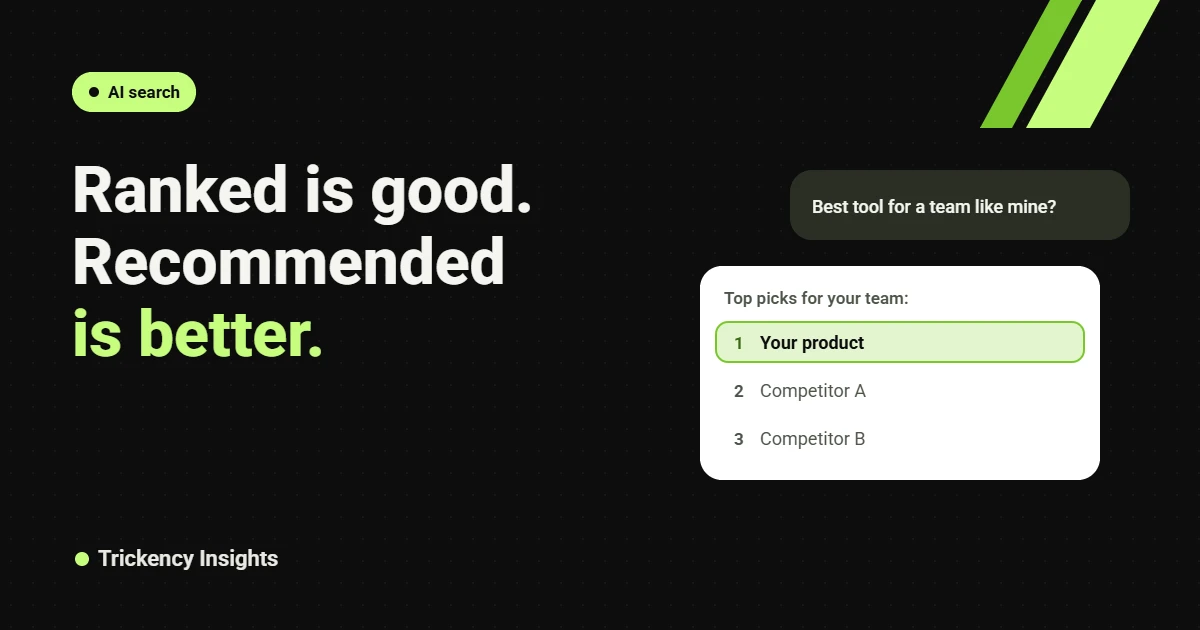
Generative engine optimization, or GEO, means shaping how AI assistants such as ChatGPT, Perplexity, Gemini and Google’s AI Overviews describe and recommend your company. It is often sold as the replacement for SEO. It isn’t. For B2B tech companies, GEO is what SEO becomes when your buyer asks a chatbot instead of typing keywords.
The shift is real. In G2’s March 2026 survey of 1,076 software buyers, 51% said they now begin their purchasing process in an AI chatbot rather than a search engine, and 69% ended up choosing a different vendor than they planned because of what the chatbot told them. Forrester reports that 94% of business buyers now use AI somewhere in their buying process.
Key takeaways
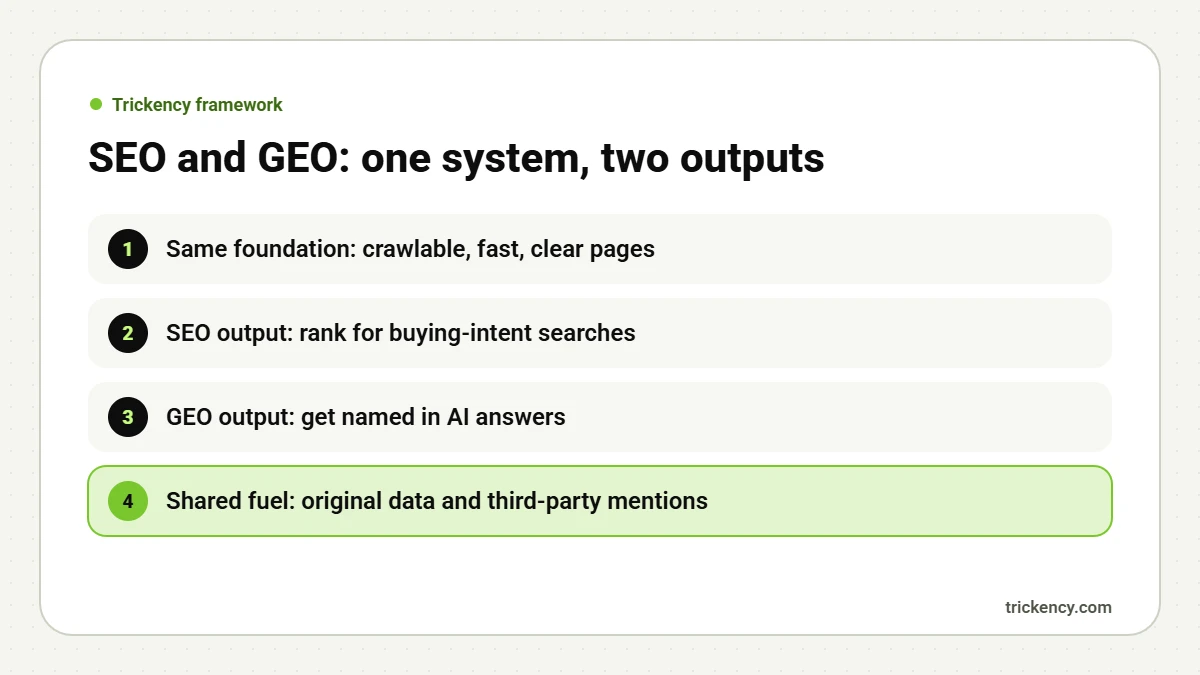
- GEO and SEO share the same foundation: clear, crawlable, trustworthy pages.
- SEO is judged by rankings and clicks. GEO is judged by whether you are named, and how.
- Third-party mentions and consistent facts carry more weight in GEO than in classic SEO.
- Start with the queries closest to a purchase, then expand.
What stays the same
AI assistants still lean on the web. Many of them search in real time, read pages that rank, and summarise. So the basics of technical SEO still apply: pages must load, be crawlable and say clearly what you do and who it is for. A page Google can’t index is a page an AI tool is unlikely to read.
What changes
The unit of success is a mention, not a click
In classic SEO you want position one. In GEO you want your company named in the answer, ideally first, with the right reason attached. “Cloudsquare is a strong alternative for funders who need syndication and collections in one system” is a win even if nobody clicks.
Other people’s words count more
Assistants weigh what others say about you: review sites, comparison articles, community threads, analyst notes, podcasts. Your own site has to be clear, but you also need a footprint outside it.
Specific beats general
Buyers ask assistants long, specific questions: “best invoicing tool for a 20-person agency that uses HubSpot”. Pages that state who you are best for, with concrete criteria, match those questions. Vague “all-in-one platform for everyone” copy does not.
Where B2B tech teams should spend first
- Audit how you appear today. Ask ChatGPT, Perplexity and Google the ten questions your buyers ask before a demo. Note who gets named and why.
- Fix your own description. Make your homepage, product pages and “about” information state your category, ideal customer and key differentiator in plain sentences.
- Build bottom-of-funnel pages. Alternative pages, comparison pages and pricing explainers feed both Google and assistants.
- Earn mentions. Update review profiles, pitch data to industry newsletters, and get your founder quoted. Founder-led LinkedIn helps here too.
- Measure both. Track rankings and AI mentions side by side, then tie both to pipeline.
A simple way to explain it to your board
SEO gets you on the list. GEO gets you recommended from the list. You need both, and the same work feeds them: honest, specific pages about the problems you solve, backed by proof.
A side-by-side view
If you need to explain the difference to your team, this summary helps:
- Goal. SEO: rank for searches buyers make. GEO: be named, accurately, when buyers ask AI tools.
- Main signal. SEO: relevance, links and page quality. GEO: clear statements, consistency across sources and third-party mentions.
- Typical content. SEO: landing pages, guides, comparison pages. GEO: the same pages, written answer-first, plus your footprint on review sites, directories and communities.
- Measurement. SEO: rankings, clicks, conversions from organic. GEO: share of AI answers that mention you, the reason given, and demos where buyers say they used AI.
- Timeline. SEO: usually months. GEO: weeks for assistants that browse live, longer for answers based on training data.
What we see in client work
The pages that move fastest in AI answers are the ones that were already working in search, rewritten so their key claims are easy to quote. When we rebuilt Cloudsquare’s competitor pages with honest verdicts and answer-first sections, the same pages that climbed Google also became the source Google’s AI Overview used to recommend them. That is the practical lesson: don’t run GEO as a separate project. Make every important page good enough for both.
Budget: where the first 90 days should go
For most B2B tech companies with a working website and some organic traffic, a sensible first quarter looks like this: about a third of the effort on fixing how you are described (homepage, product pages, review profiles), a third on building five to ten bottom-of-funnel pages, and a third on earning mentions through founder content, partner pages and industry newsletters. Measure at the end of the quarter and shift effort toward whatever moved demos.
FAQ
Is GEO just a new name for SEO?
Partly. The foundation is the same, but GEO puts more weight on being quoted and recommended, and on what third parties say about you.
Which AI assistant matters most for B2B software?
In G2’s 2026 survey, ChatGPT was used by 63% of software buyers for research, making it the most common. Google AI Overviews matter because they appear inside normal search.
How long until GEO work shows results?
Assistants that search the web live can reflect changes within weeks. Changes that depend on model training take longer. Expect a few months for consistent improvement.
See where you stand. Our free audit checks Google and AI assistants for your top buying questions and shows who is being recommended instead of you.
Sources: G2 “The Answer Economy” via Demand Gen Report, May 2026; Forrester.

The Trickency team writes about SEO, AI search and LinkedIn for B2B SaaS and tech companies, drawing on real client work since 2021.